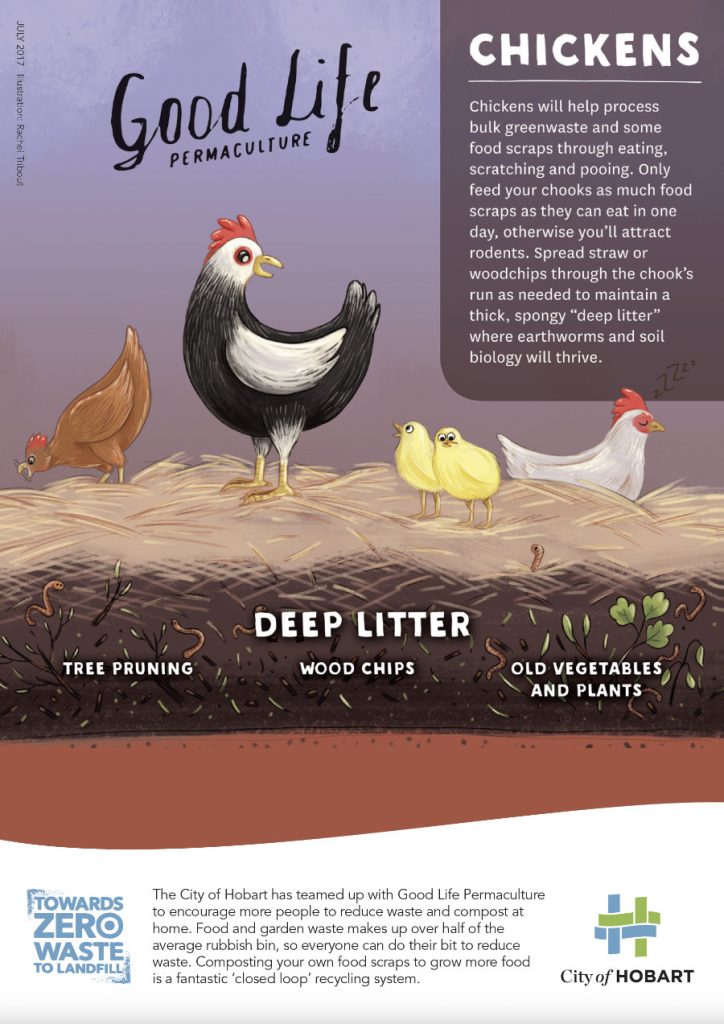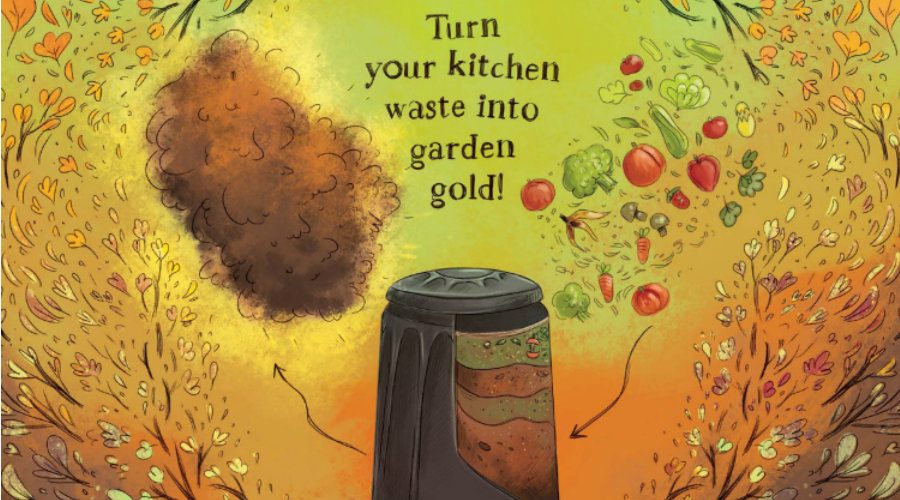
Composting at home
Booklet and flyer by Hobart City
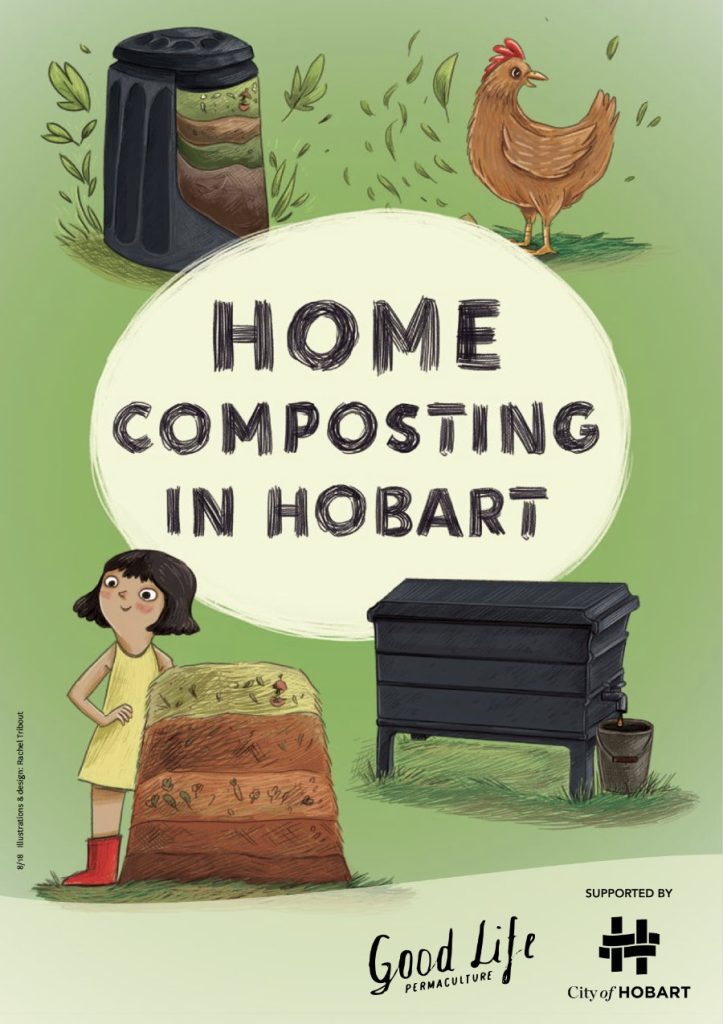
Free Booklet
Learn how to compost at home with the PDF free booklet Home Composting in Hobart.
We released this booklet as part of our efforts to achieve zero waste to landfill by 2030.
It provides strategies and techniques for composting food waste.
Contents:
- Food Waste Facts
- Reduce Food Waste & $ave Money!
- Benefits of Composting
- Universal Ingredients
- What Food Scraps Go in Compost?
- Worm Farms
- Rapid Composting
- Compost Bins
- Compost Tumblers
- Bokashi Bins
- Chickens
- Composting Dog & Cat Poo
- What’s Wrong with my Compost?
- Grow Your Own Food
Credits:
- Text by Good Life Permaculture
- Illustration & design by Rachel Tribout
These three flyers also provide handy tips
Produced by Good Life Permaculture, with illustrations by local artist Rachel Tribout.
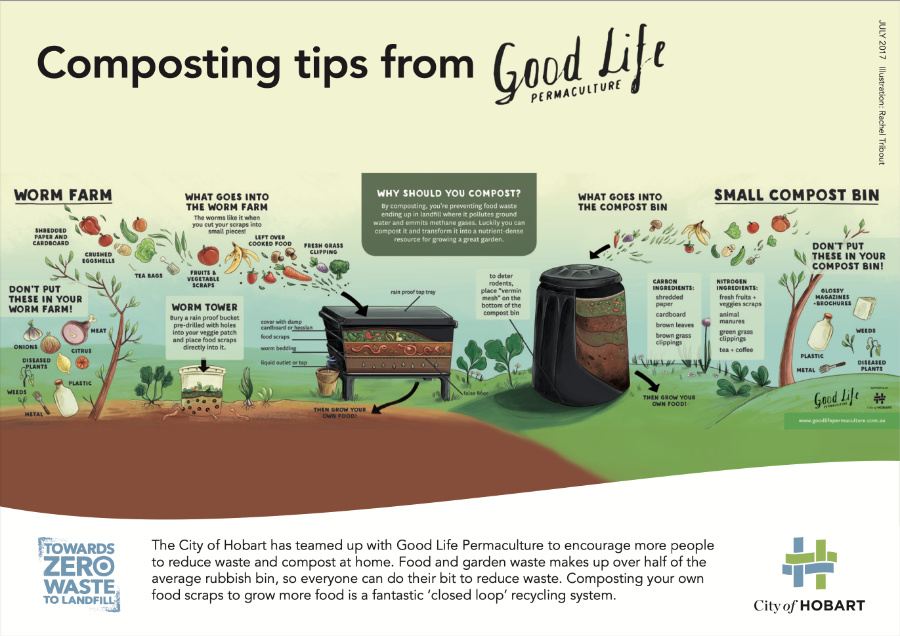
1. Composting Tips
Why should you compost? By composting, you’re preventing food wast ending up in landfill where it pollutes ground water and emits methane gases. Luckily you can compost it and transform it into a nutrient-dense resource for growing a great garden.
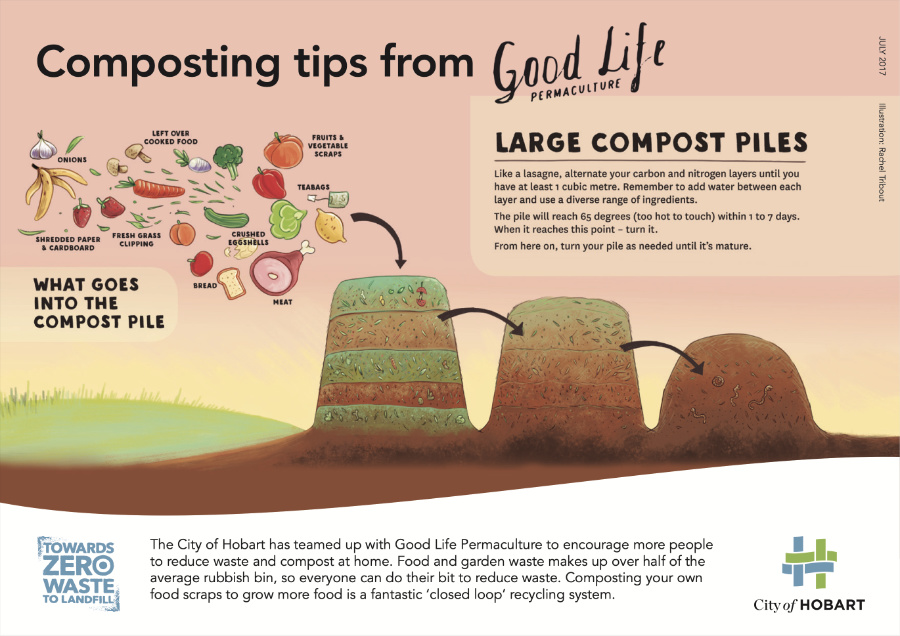
2. Large Compost Piles
Why should you compost? By composting, you’re preventing food wast ending up in landfill where it pollutes ground water and emits methane gases. Luckily you can compost it and transform it into a nutrient-dense resource for growing a great garden.
3. Chickens
Chickens will help process bulk green waste and some food scraps through eating, scratching and pooing. Only feed your chooks as much food scraps as they can eat in one day, otherwise you’ll attract rodents. Spread straw or wood chips through the chook’srun as needed to maintain a thick, spongy ‘deep litter’ where earthworms and soil biology will thrive.